WHERE WILDERNESS, TRADITION AND CHALLENGE COME TOGETHER
Discovering Norway’s Unique Hunting Culture
Hunting in Norway has deep historical roots. For centuries it was not recreation, but a vital part of survival. Meat from wild game was essential in a country with harsh climate, limited farmland, and long winters. Compared to much of Central Europe, Norwegian hunting developed with a very different foundation.
Norway never had a strong tradition of aristocratic or court hunting as seen in countries like Germany. Hunting here belonged to farmers, fishermen, and people living close to nature. Its purpose was food first. Over time, as society changed, hunting naturally became a valued leisure activity as well. But the core idea remains. Harvesting wild meat is still central to why most Norwegians hunt.
How hunting is organized
Hunting in Norway is strictly regulated and strongly connected to landownership, yet access is relatively open compared to many European systems. Large areas are managed by local landowner associations, mountain boards, and public land administrators.
To hunt legally, you must hold a valid hunting license, pass an annual shooting proficiency test, and purchase hunting permits for specific species and areas. Quotas are widely used for big game, and wildlife management is closely monitored.
The result is stable and harvestable wildlife populations, managed with a long term perspective rather than short term yield.
The Norwegian hunting year
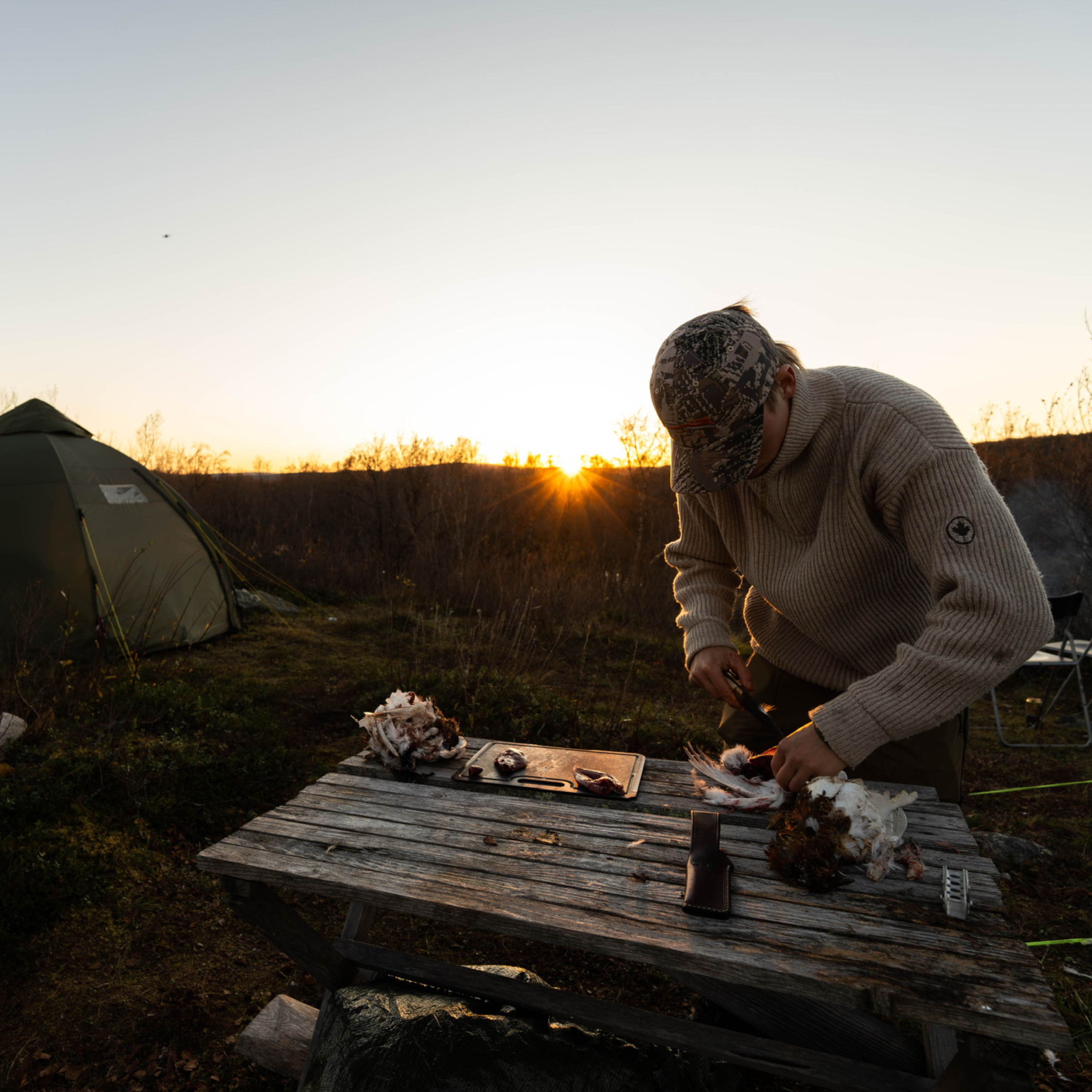
The hunting year in Norway follows a clear seasonal rhythm. Big game hunting for species such as moose and red deer takes place mainly in autumn, from September through late December. Roe deer can be hunted earlier, with seasons starting in late summer. Small game hunting, including ptarmigan and forest birds, begins in early autumn and continues into late winter in the northern areas. Predator hunting is largely concentrated in winter, when snow conditions allow for trapping, tracking and dog work. This seasonal structure reflects both biology and tradition, ensuring sustainable harvests aligned with wildlife behavior and natural cycles.
Landscape, climate, and wildlife density
Game densities in Norway are generally lower than in Central Europe, but populations are healthy and sustainably harvestable. This difference is largely explained by landscape, climate, and food availability.
Only about 3.5 percent of Norway’s land area is agricultural land. In comparison, Germany has close to 50 percent farmland. Less agriculture means less concentrated food resources, but it also results in wildlife that is more evenly distributed across large areas.
Combined with mountainous terrain and long winters, this creates a hunting environment where success is fully achievable, but rarely effortless. Hunters are rewarded for preparation, physical effort, and good decision making rather than high animal density.
A diverse and wild fauna
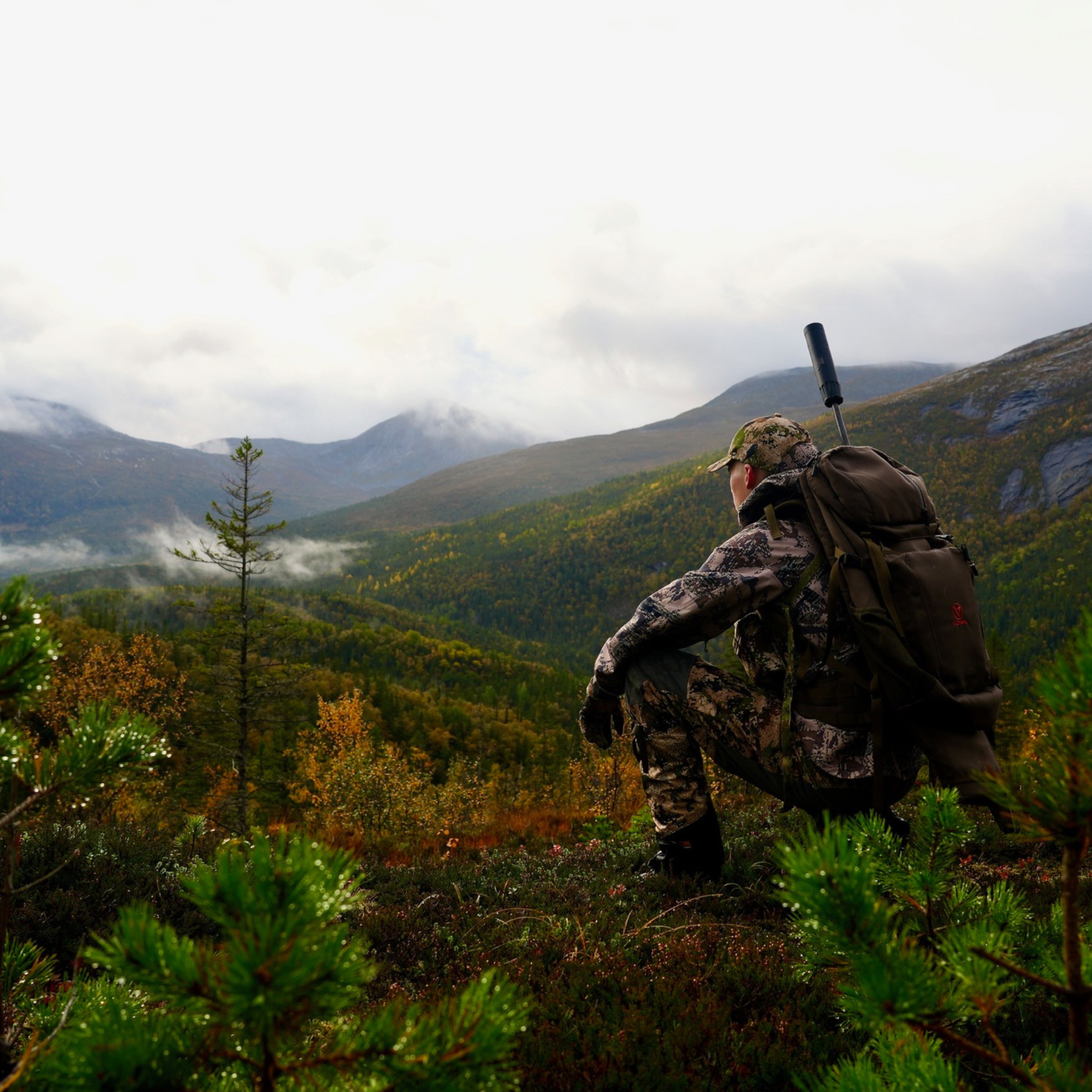
Despite lower densities, Norway offers a wide and well balanced fauna.
Hunters pursue large herbivores such as moose, red deer, roe deer, and reindeer. Small game hunting includes species like willow ptarmigan, rock ptarmigan, capercaillie, black grouse, hazel grouse, and mountain hare.
Norway also holds both small and large predators, from red fox and pine marten to lynx, wolverine, brown bear, and wolf. This complete predator prey system is a key reason why wildlife management focuses on conservation and balance rather than maximum harvest.
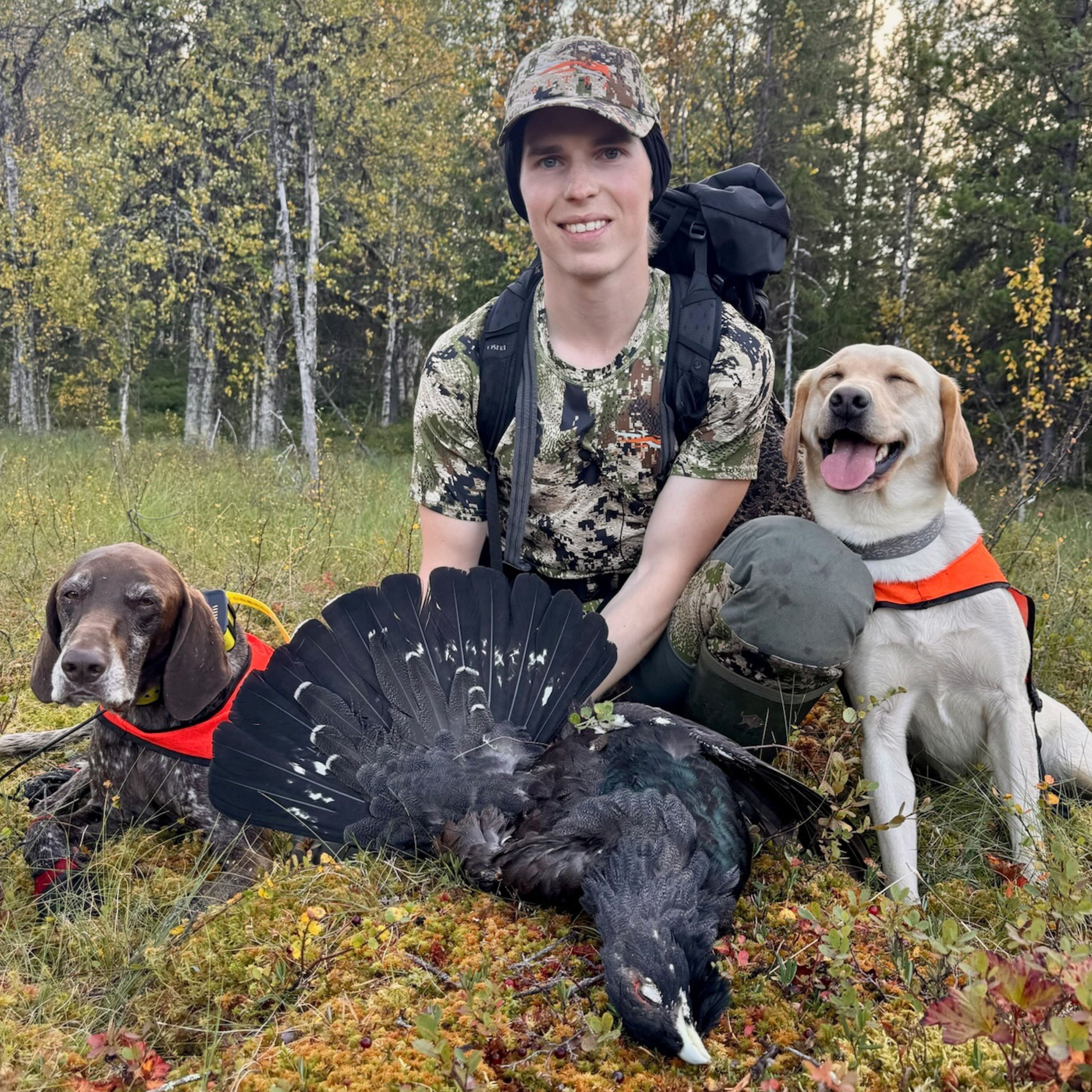
Among forest birds, the capercaillie deserves special mention. Often referred to as the king of the forest, the mature male is one of Scandinavia’s most iconic game species. Large, cautious, and deeply tied to old growth forest, hunting capercaillie is both a challenge and a tradition.
Many hunting forms in demanding terrain
Norway is an ideal country for hunters seeking variation rather than predictability. The same season can include high mountain hunting above the tree line, dense boreal forests, and cultivated landscapes in valleys.
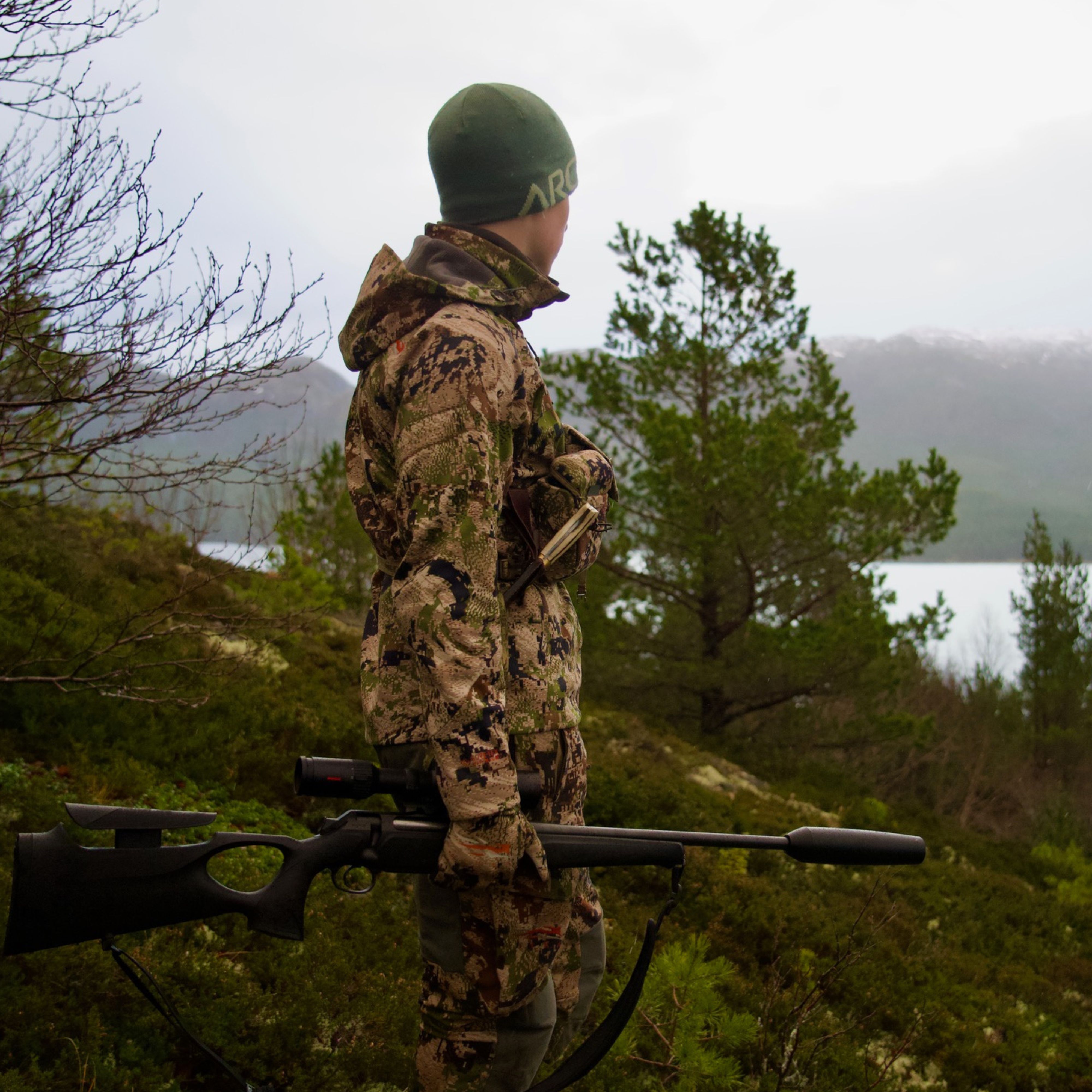
Common hunting forms include stalking of deer and reindeer, driven hunts for moose and red deer in some regions, and extensive small game hunting on foot. The terrain often dictates method, and physical effort is part of the experience rather than an obstacle.
Hunting with dogs as a cornerstone
Hunting with dogs is deeply rooted in Norwegian culture and remains widespread.
Pointing dogs are central in ptarmigan and forest bird hunting. Loose dog hunting for moose is a defining feature of Scandinavian big game hunting, where the dog works independently to engage the animal. Driving dogs are commonly used for red fox and other small predators, and specialized dogs are also used in lynx hunting.
The partnership between hunter and dog is essential, and for many, it represents the heart of the hunting tradition.
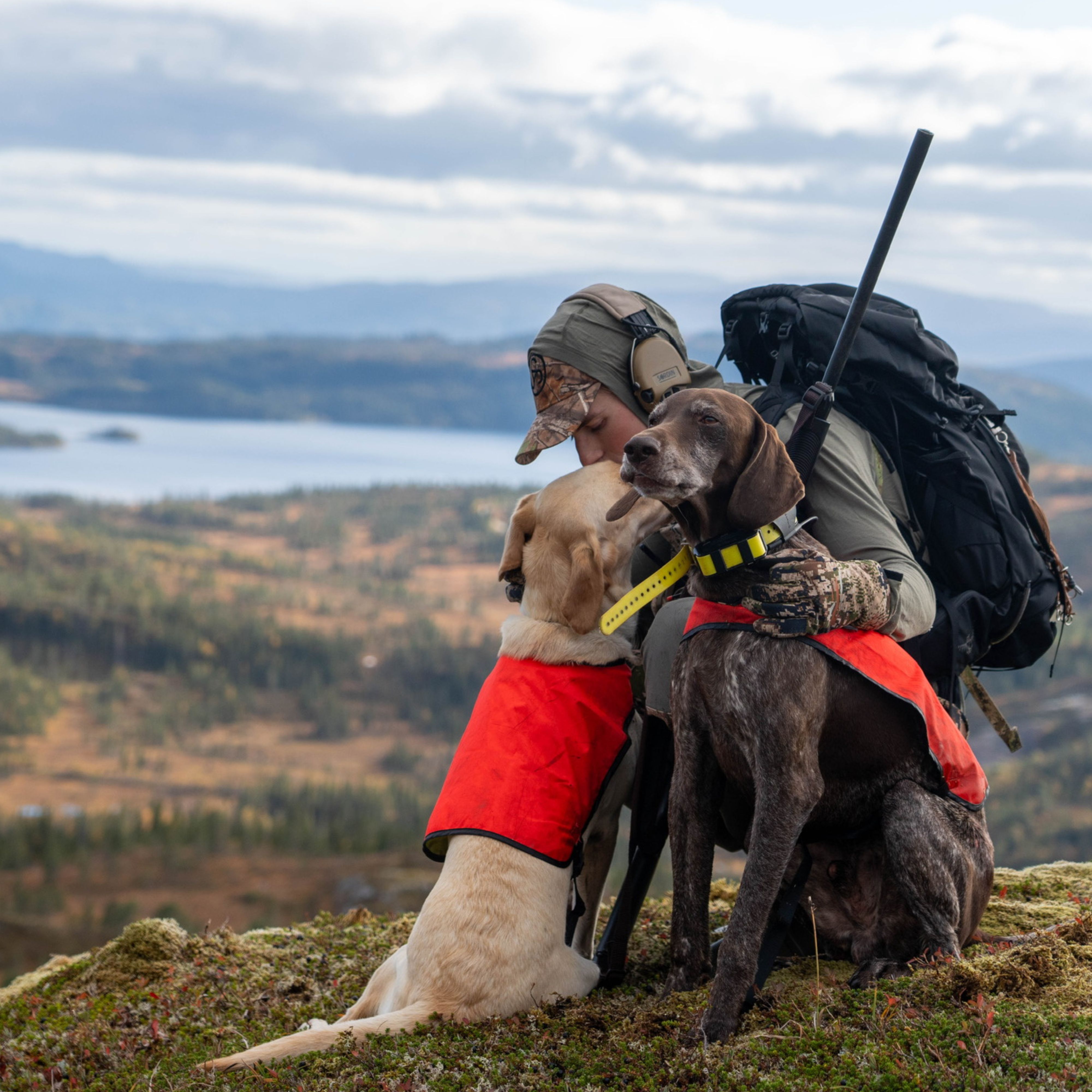

A personal reflection
For me, hunting in Norway is about meaningful effort. Wildlife populations are healthy and harvestable, but success must be earned. Long days, changing weather, and large areas require patience, knowledge, and the right equipment.
This is a country for hunters who appreciate variety, challenge, and a strong connection between nature, tradition, and food. That balance is what defines Norwegian hunting.

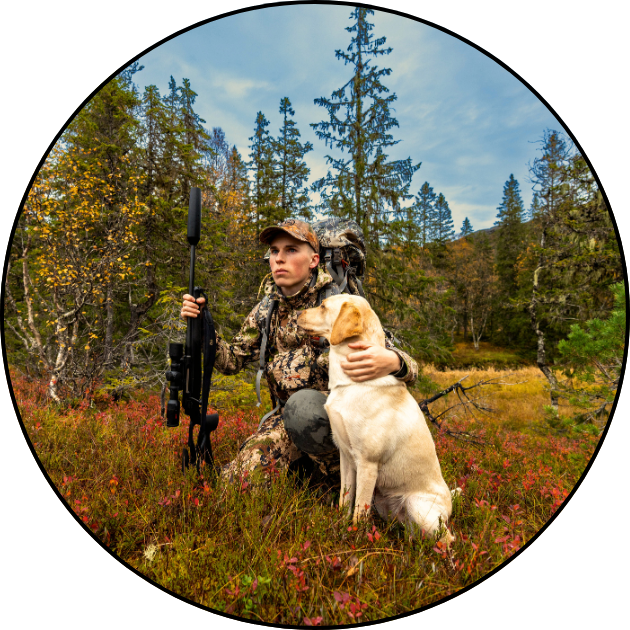
Elias Gangstø
One of my three older brothers introduced me to hunting and took me along on trips from an early age. At 14, I passed my hunting exam, and hunting has been my greatest passion ever since. I am incredibly fortunate to have grown up in Bindal, Norway, with almost unlimited access to hunting grounds. Today, together with my friend Markus Brevik, I run the hunting profile Jegerkaran, where we share our adventures on YouTube and on our own website.
Equipment:
Sauer 505 XT
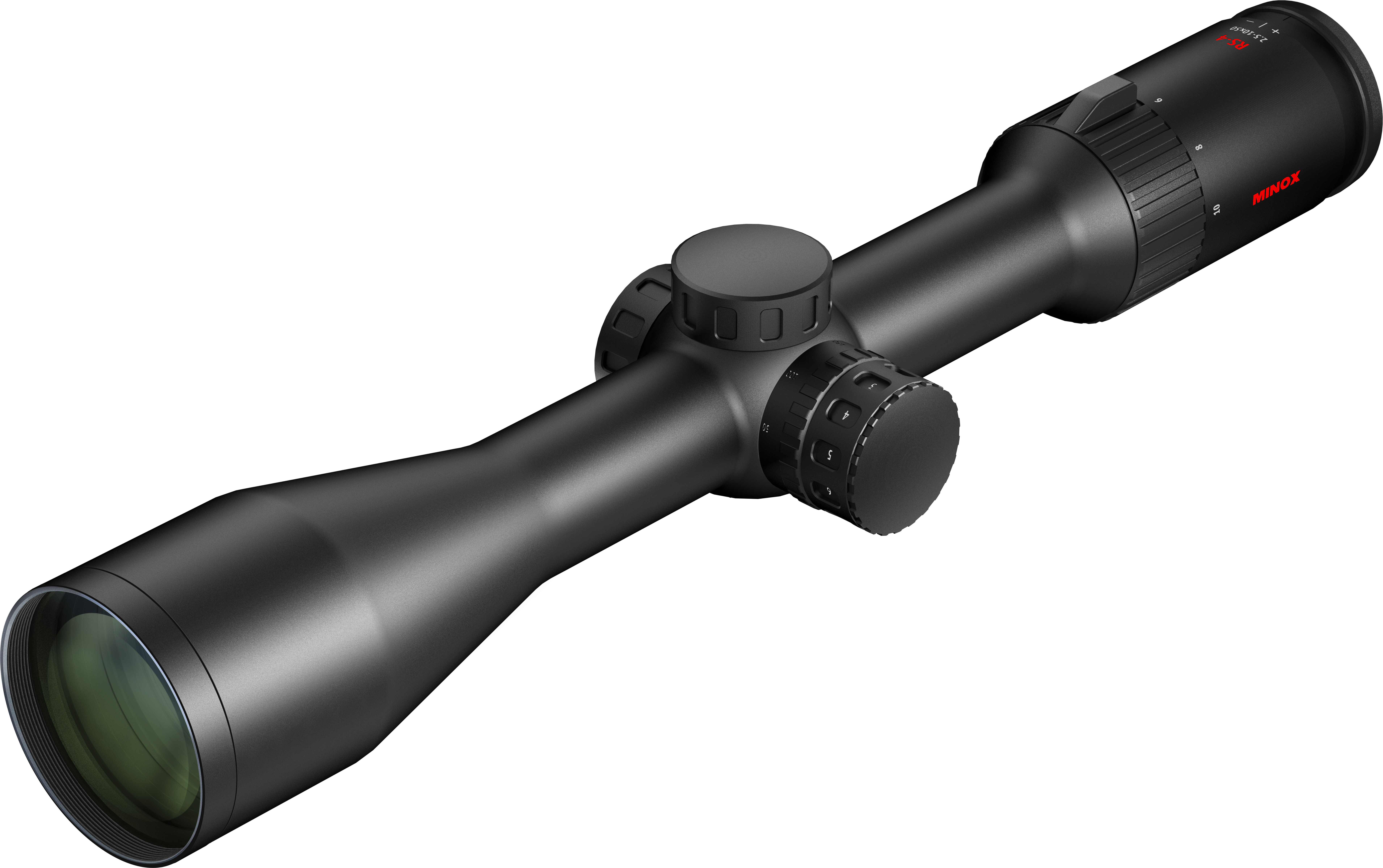
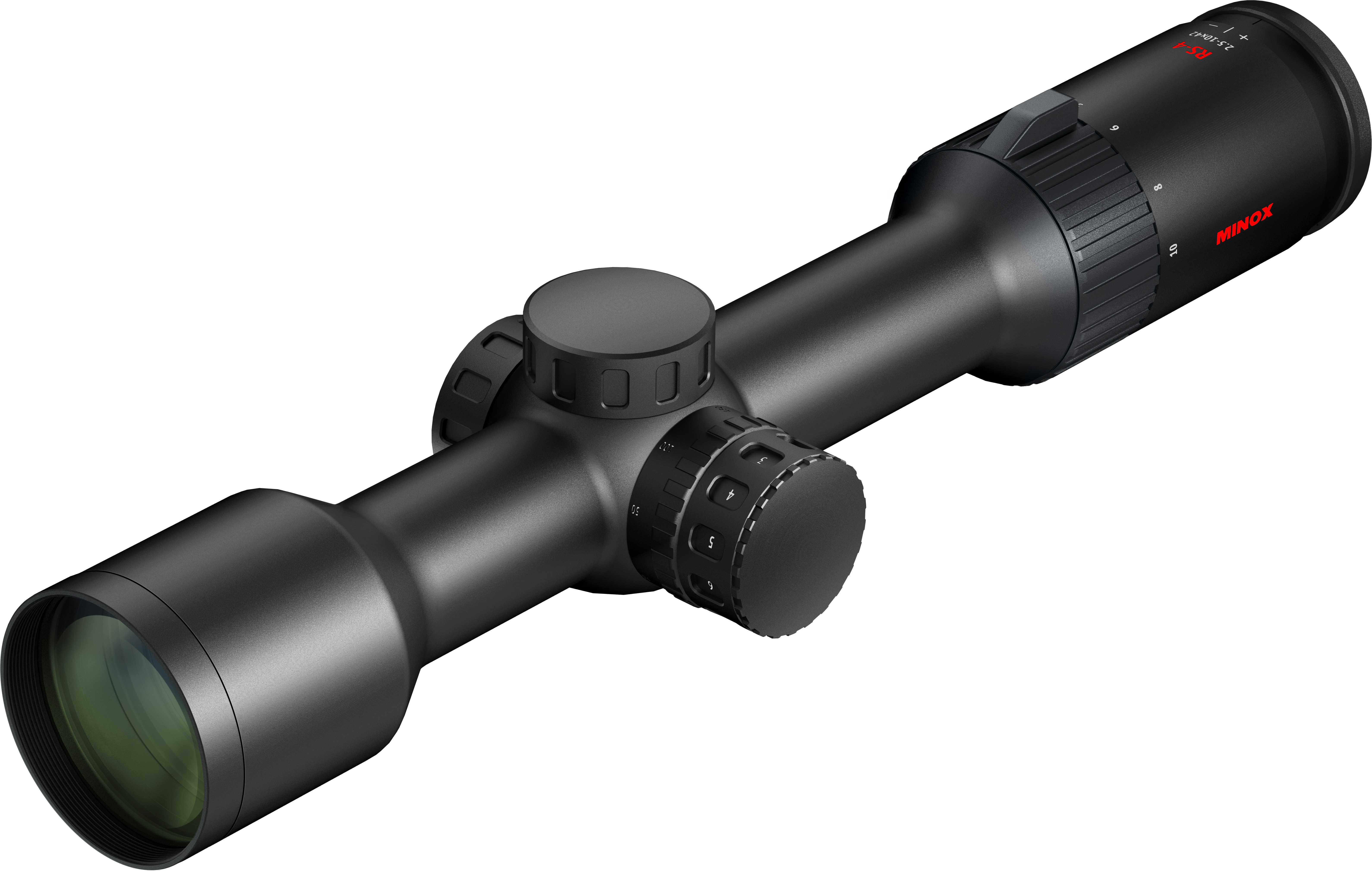
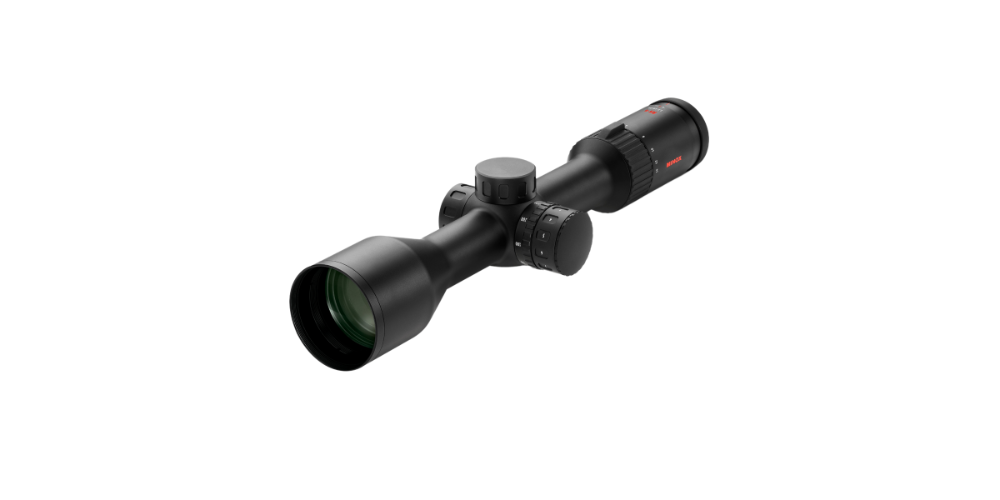
RS-4 2.5-10x42
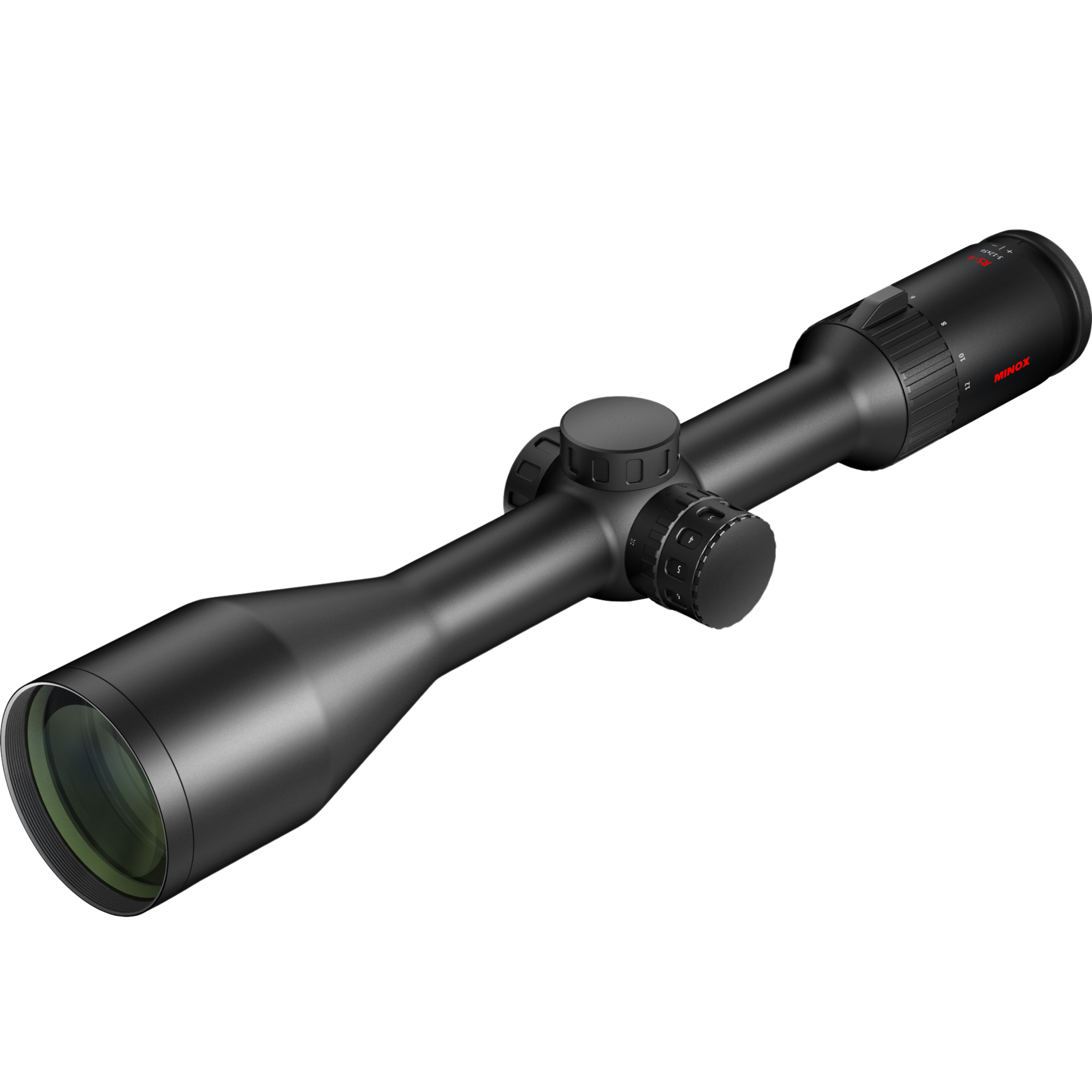
RS-4 2.5-12x56 BDC
MINOX X-range 10x422
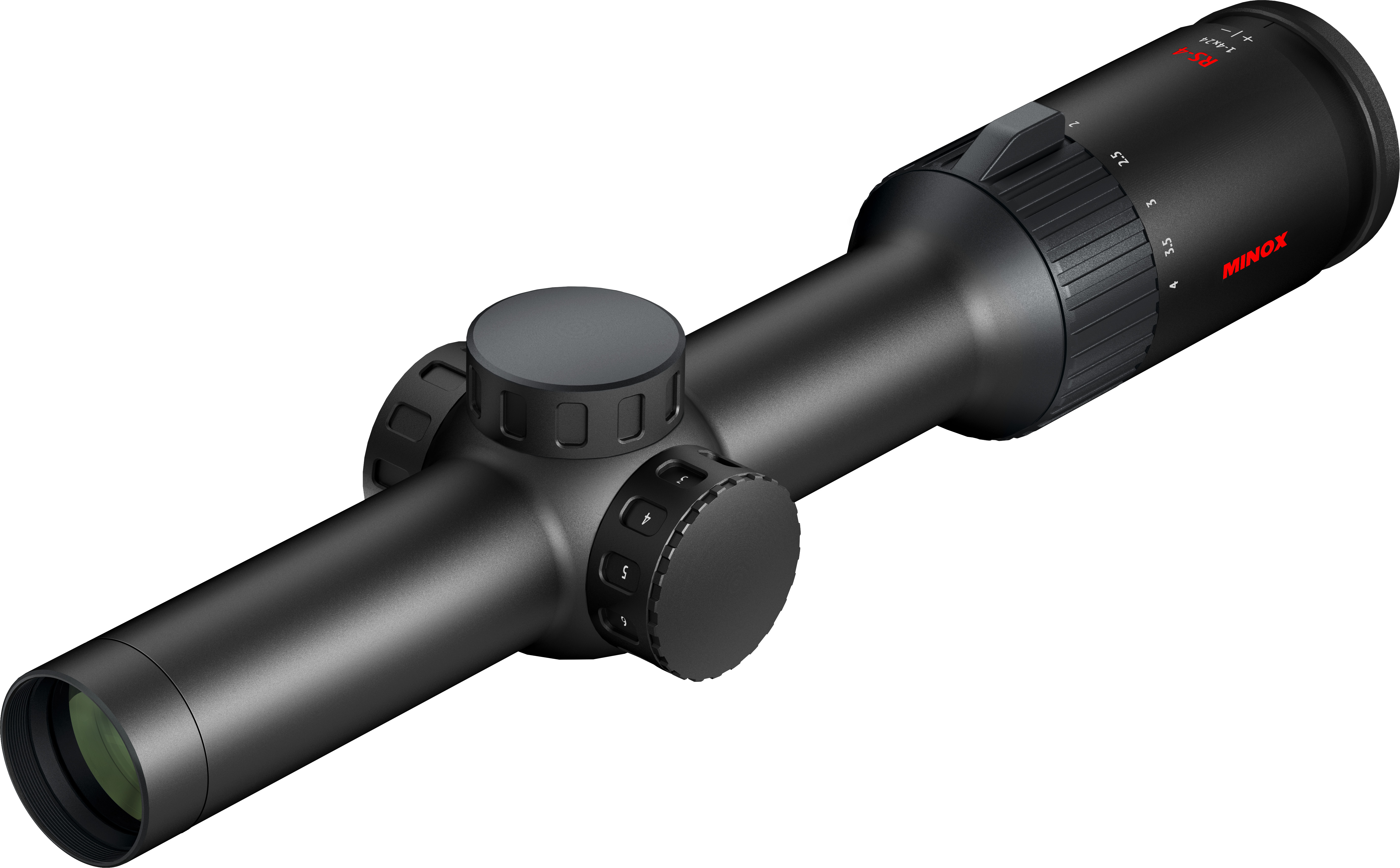
Everything a riflescope needs. The new RS-4 series